






CRISPR-Edited Peanuts Target Major Allergens in First US Field Trial
SOURCE: GLOBAL-AGRICULTURE.COM
OCT 04, 2026
Scientists Gene-Edited a Dog. It Likely Won’t Stop There
SOURCE: NEWSWEEK.COM
AUG 22, 2026

Published
Aug 22, 2026 at 05:30 AM EDT

Reporter
Newsweek is a Trust Project member
Prefer Newsweek on Googleto see more of our trusted coverage when you search.
A new study suggests scientists may eventually tackle dog allergies at their source, opening the door to a bigger question: what else could we genetically change in our pets?
Researchers created two gene-edited beagles, Alfie and Bailey, in September 2024. In a new study published in The CRISPR Journal, the researchers found no detectable Can f 1—a major dog allergen—in saliva, hair or dander from the edited dogs. Extracts from the dogs also produced no detectable allergic skin response in the single sensitized person tested.
The researchers emphasize that the work is a proof of concept rather than a finished allergy treatment, since the study involved only two canines. The dogs have shown normal growth and development so far, but the research raises the possibility that gene editing could eventually be used to prevent disease or improve animal health.
Dad Eats One of His Kid’s Candy Bars, Not Ready for Picture Son Sends Him4 min read

Woman Stopped Contraception Injection—Then Her Health Took Devastating Turn5 min read

The Price Tag Is Dying—and Affordability Politics Changes With It6 min read

Matt Walker, the study's lead author, told Newsweek that gene editing could become another tool for addressing specific biological problems in companion animals.

Two beagles, Alfie and Bailey, have been genetically edited to produce no detectable dog allergens, with early tests showing they've been developing n...Read More | Kindred Companion Sciences
"The most realistic applications are likely to involve well-characterized genetic conditions where a specific change could provide a meaningful health or welfare benefit," Walker said.
That could be particularly relevant for dogs, where selective breeding has contributed to inherited health problems in some breeds.
Hip, spinal and respiratory disorders, for example, affect certain breeds at higher rates. Walker said gene editing could eventually offer a more precise way to address some inherited conditions, but only when the underlying genetics are well understood, and there is strong evidence that the change benefits the animal.
Rather than dramatically redesigning an animal, Walker said gene editing can involve an extremely small genetic change. In this case, researchers made a single-letter change in the dogs' DNA at a specific site.
"Our goal is not to redesign dogs, but to make a minimal and precise change that addresses a real problem," Walker said.
He said he is most excited about the possibility of using the technology to prevent disease and improve animal welfare. But for him, the value depends on using it for meaningful benefits that prioritize animal health over appearance, temperament or characteristics.
Other possibilities, including extending pets' lifespans, are considerably more complicated. Aging depends on numerous biological processes rather than a single, easily targeted trait. Preventing inherited disease may therefore be a more realistic route toward helping pets live healthier lives for longer.
Dogs may not be the only companion animals the technology could eventually affect.
Cat allergies are commonly associated with Fel d 1, a protein produced by cats. Could scientists eventually target that protein in the same way?
Walker said gene editing can, in principle, be applied to other pets, but each species presents different scientific challenges.
"Cat allergens, for example, have a different and more complex genetic basis than the dog allergen that we targeted," he said.
For now, Walker's team is focused on dogs and building evidence around the safety and potential benefits of its approach.

Matt Walker used a gene-editing technique on his two hypoallergenic beagles, Alfie and Bailey. | Kindred Companion Sciences
Jessica Pierce, a bioethicist who writes about animal ethics and human-animal relationships, said the technology itself is neither inherently good nor bad. Instead, she believes the central questions are what it does for humans and animals, who benefits and who bears the risks.
In the case of gene-edited, allergy-friendly dogs, the immediate goal is primarily to solve a human problem: making it easier for people with allergies to live with dogs.
Pierce said that does not necessarily make the research unethical, and she does not want to minimize how difficult severe allergies can be. But she questioned whether redesigning dogs should be the first response.
"In my mind this is consumer-centered innovation," Pierce said.
That distinction could become increasingly important as scientists move beyond eliminating allergens and begin considering genetic changes aimed at other traits.
Using gene editing to prevent a painful inherited disease, for example, could look very different from altering a dog because an owner prefers a particular appearance or behavior.
She also compared the emerging debate to a new stage of domestication. Historically, living with animals has required humans to adapt to them—their shedding, mud, noise and other characteristics. Gene editing could potentially reverse that relationship by making animals increasingly adaptable to human preferences.
That raises a fundamental question about what people want their relationships with companion animals to look like: Are dogs fellow beings with whom humans share their lives, or are they products that can increasingly be optimized for human satisfaction?
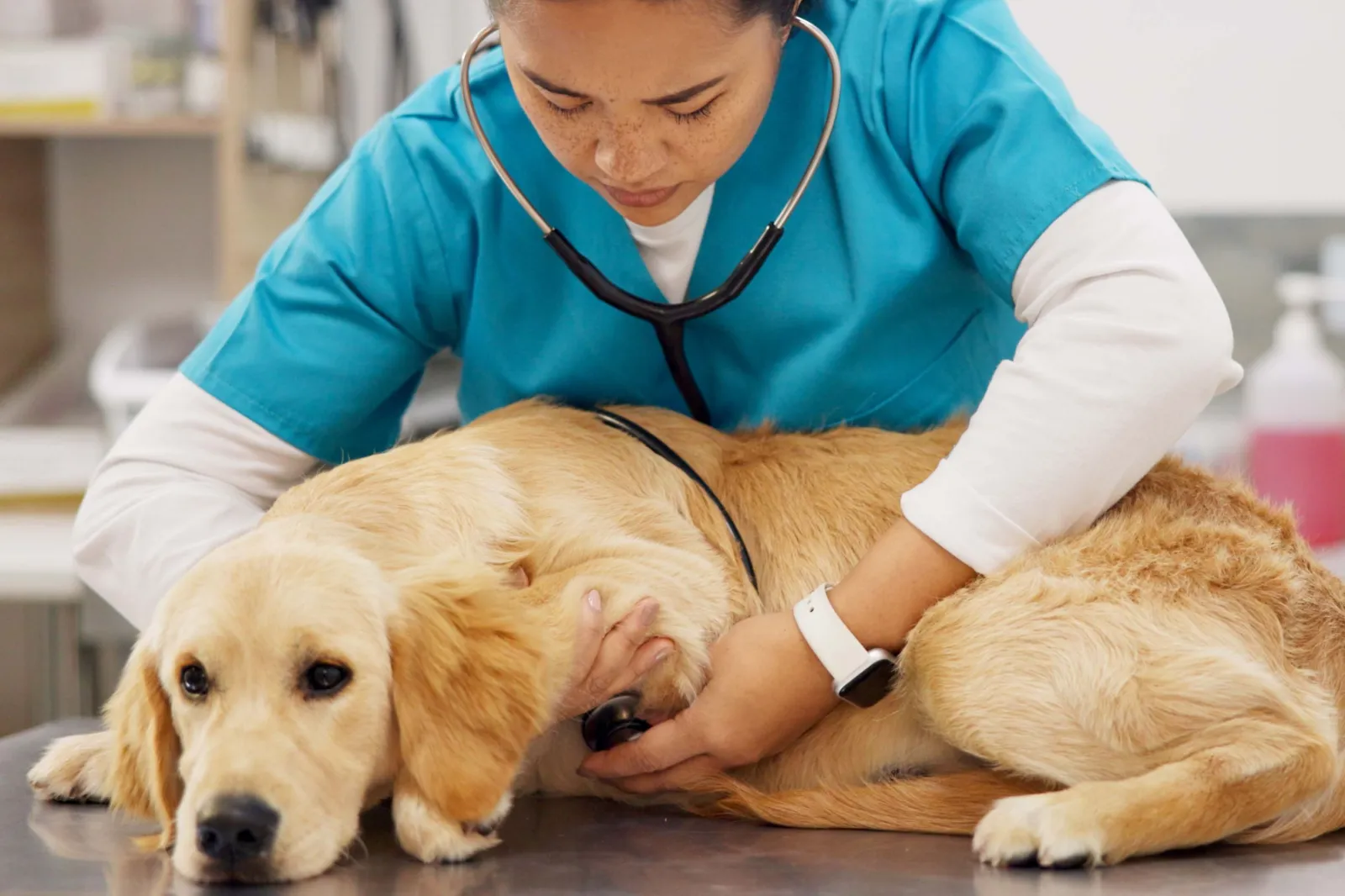
FDA Authorizes Emergency Drug To Help Treat New World Screwworm in Dogs
Another complication is that millions of dogs and cats already need homes.
Creating new pets while animal shelters struggle with overcrowding raises questions about whether biotechnology could encourage people to see animals as products that can be optimized to fit their lifestyles.
Pierce said she does not believe research should stop simply because shelter animals need homes, but argued that the shelter crisis cannot be separated from the conversation.
"Biotechnology is not happening in a vacuum," she said.
For now, gene-edited pets remain far from a trip to the breeder.
The study found no clinically apparent health abnormalities in the two edited dogs to date, but the authors acknowledge that the work was not a comprehensive assessment of every possible long-term effect.
The technology also faces regulatory hurdles. Walker said gene-edited animals are subject to Food and Drug Administration oversight, including evaluation of animal health, genomic data and potential effects on people or the environment.
"We do not have a commercial availability date to announce," Walker said.
The study's authors also disclose financial and ownership interests in Kindred Companion Sciences and say Can9 Bioengineering, Inc. funded the work; a patent application has been filed related to the research.
The question may ultimately be less about whether scientists can genetically engineer companion animals and more about when they should. For Walker, the answer lies in using the technology selectively.
"Gene editing does not necessarily involve making dramatic changes to an animal's genetic code," Walker said. "In our case, we made a precise, single-letter change in DNA."
For animal ethicists, however, the definition of a "real problem" may be where the hardest conversations begin.
Contact Newsweek editors on this story: Kara Dolman and Sam Wilson.
LATEST NEWS


WHAT'S TRENDING

Data Science
5 Imaginative Data Science Projects That Can Make Your Portfolio Stand Out
OCT 05, 2022


SOURCE: GLOBAL-AGRICULTURE.COM
OCT 04, 2026

SOURCE: APP.DEALROOM.CO
OCT 04, 2026


SOURCE: BIOENGINEER.ORG
SEP 27, 2026

SOURCE: PHYS.ORG
SEP 18, 2026


SOURCE: TRADINGVIEW.COM
SEP 09, 2026