





ThrillSeeker's company filed its 2023 and 2024 reports, and revenue fell 78%
SOURCE: MIXED-NEWS.COM
OCT 04, 2026
Loft Dynamics and Pathfinder Aviation Bring H125 VR Training to Alaska
SOURCE: THEMACHINEMAKER.COM
SEP 19, 2026

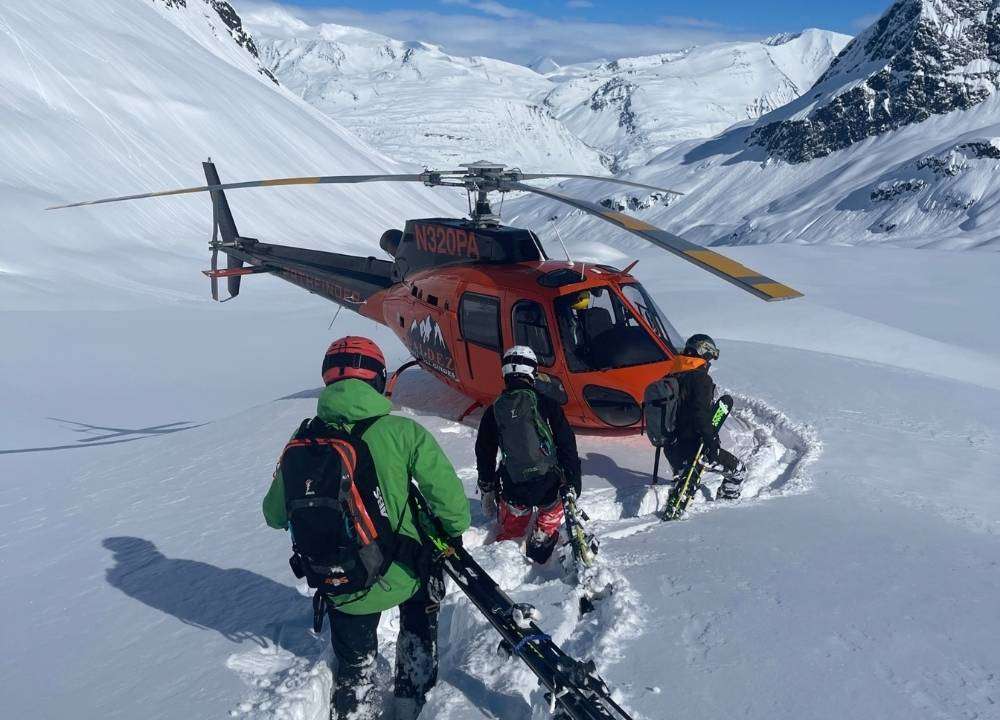
Image Courtesy: Loft Dynamics
Loft Dynamics, a leader in virtual reality (VR) pilot training, has announced that Pathfinder Aviation will install Alaska’s first Airbus H125 VR simulator at its main base in Anchorage. The installation will give Pathfinder pilots year-round access to aircraft-specific training without the need to travel outside the state for simulator sessions.
Pathfinder operates a fleet of 22 helicopters and records approximately 8,000 flight hours annually, supporting remote operations and precision external-load missions across Alaska and the continental United States. For helicopter operators in Alaska, maintaining regular training schedules can be challenging due to weather, limited winter daylight and the demands of peak operating periods. Many Pathfinder pilots also live outside Alaska and travel to the state for training, making weather-related disruptions particularly difficult to manage.
The simulator is expected to arrive in Anchorage in October 2026, with Pathfinder planning to begin proficiency and mission training immediately. “Helicopter pilots often do their most demanding work in places where consistent simulator access is hardest to come by,” said Sebastien Borel, CEO of Loft Dynamics. “Alaska exposes the limits of a training model that depends on good weather, spare aircraft and long-distance travel. Pathfinder is changing the equation by putting H125 training at its base in Anchorage, where pilots can train more often, safely and on their own schedule. The old model asks pilots to go to the simulator. We’re building a future where the simulator comes to the pilots.”
Pathfinder plans to use the simulator for inadvertent IMC (IIMC) avoidance, including repeated practice in responding to loss of visual reference and transitioning to instruments. Training will also cover Part 135 emergency procedures, Part 133 external-load operations, normal and abnormal procedures, whiteout conditions, mountain, pinnacle, slope and confined-site operations, as well as local site and terrain familiarisation.
Heli-skiing will be an early training focus. Pathfinder’s H125 pilots operate in mountainous, snow-covered terrain where flat light, blowing snow and rapidly changing visibility can complicate landing-zone decisions. Loft Dynamics is developing scenery based on Pathfinder’s real-world heli-skiing areas in the Chugach Mountains, including the Valdez/Thompson Pass region and north Cordova. This will allow pilots to familiarise themselves with local terrain and landing sites before undertaking missions.
“In Alaska, we don’t get to choose when conditions become difficult, so our pilots need to be ready before they do,” said Rogan Parker, CEO of Pathfinder Aviation. “The value of having this simulator in Anchorage is repetition. We can put pilots through a whiteout, IIMC event or emergency, work through decision making, then run the scenario again. That kind of repetition is hard to achieve consistently in the aircraft, and it gives pilots the chance to build judgment before the stakes are real.”
The simulator will initially support Pathfinder’s internal pilot group and will be integrated into recurrent and seasonal training. As local demand develops, the company plans to make it available to other helicopter operators and pilots in the region. Pathfinder also plans to pursue FAA Level 7 flight training device qualification and, following qualification, incorporate available FAA training credits into its formal training programmes.
Loft Dynamics has worked with operators including Air Greenland and Helitrans Norge, bringing aircraft-specific training closer to pilots in regions where distance, weather and geography can limit access to regular simulator training. Its VR flight simulators are qualified by the Federal Aviation Administration, European Union Aviation Safety Agency and Japan Civil Aviation Bureau. The company serves aircraft operators, OEMs, training organisations and government agencies worldwide, with full-motion VR simulators designed to require significantly less space and investment than conventional full-flight simulators.
LATEST NEWS

Computer Vision
Dual-Stream AI Combines Compression Clues and Deep Vision to Expose Doctored Images
OCT 10, 2026


WHAT'S TRENDING

Data Science
5 Imaginative Data Science Projects That Can Make Your Portfolio Stand Out
OCT 05, 2022


SOURCE: MIXED-NEWS.COM
OCT 04, 2026

SOURCE: EN.GAMEGPU.COM
OCT 04, 2026

SOURCE: ALVINOLOGY.COM
SEP 27, 2026

SOURCE: MIXED-NEWS.COM
SEP 27, 2026


SOURCE: CITYLIMITS.ORG
SEP 09, 2026

SOURCE: MPRNEWS.ORG
SEP 09, 2026
