





Virtual Battery Digital Twin Evaluates Electric Vehicle Charging Demand and Storage
SOURCE: BIOENGINEER.ORG
NOV 06, 2026
Latin American metros and railways turn to cameras, AI and digital twins
SOURCE: BNAMERICAS.COM
OCT 09, 2026

BnamericasPublished: Friday, October 09, 2026
Innovation Security Sensors Iot Smart cities
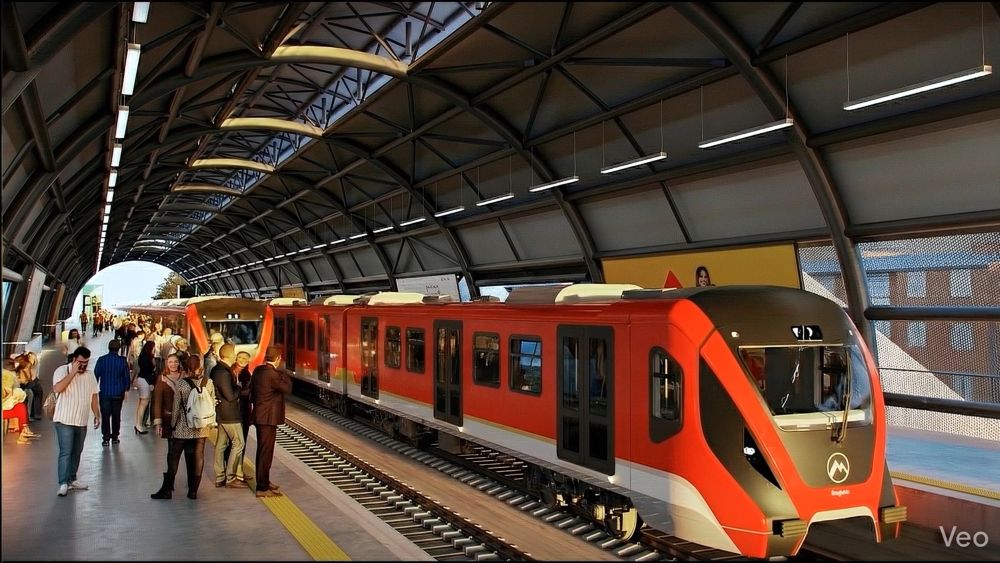
Digital transformation in the railways and metro sector in Latin America goes hand in hand with new contracts and concessions, projects that include autonomous operation and the incorporation of technologies such as cameras, artificial intelligence, and digital twins.
The operator of the Buenos Aires subway, Emova, is acquiring thermal cameras and installing cameras on board the trains, as part of a 12–24 month investment plan to detect failures in the infrastructure, according to information shared by its press department with BNamericas.
The company detailed that it is modernizing the communications of its Event Monitoring Center (CEME) to process data in real time and thus anticipate incidents, reduce response times, and integrate the signaling, energy, security, and operations areas. It did not report amounts, execution deadlines, or suppliers.
Emova maintained that it measures temperature and humidity at critical points to control ventilation and refrigeration, and that it has a network of sensors and alarms in lifting equipment, pumping wells, and signaling systems. It is also developing a real-time data collection system for the formations.
According to the company, the onboard cameras will make it possible to retrospectively analyze the condition of tracks, signage, and structures along the route and detect maintenance deviations without direct human intervention.
The main challenge, Emova stated, is to integrate these technologies with infrastructure that in many cases is decades old. In cybersecurity, the company is developing network segmentation schemes and secure communication protocols to avoid exposing critical operating systems.
Metro de Santiago is incorporating video analytics and artificial intelligence for security and the detection of risk situations. In its annual report submitted in June 2026, the company reported that 41 stations have video analytics systems, which make it possible to identify in real time fare evasion, illegal commerce, falls onto the tracks, and other behaviors that affect safety and operations.
At the Trains and Metro Congress, the chairman of the board of Metro de Santiago, Patricio Rey, projected that the network will grow by more than 50% with lines 7, 8 and 9, a connection to the airport and extensions of Line 6, and that more than half will operate with automated standards, according to a release from Hitachi Energy.
Alstom is manufacturing 37 automatic Metropolis trains with communications-based train control (CBTC) signaling for the future Line 7 of the Santiago Metro.
Metro de Santiago carried out an operational geolocation pilot test in 2025, which laid the foundations for the digital twin strategy applied to trains and stations, it reported in its annual report.
In Colombia, Metro de Bogotá is preparing a digital twin of the first line, a virtual replica that receives real-time information and allows scenario simulations without affecting the service, according to ENTER.CO, which spoke with the operator’s head of digital transformation, Pedro Luis González, at the AWS Summit Bogotá 2026. The operator chose Amazon Web Services to host its cloud infrastructure, its data systems and artificial intelligence developments.
In Mexico, the growth of trains is also accompanied by investment in communication networks. On October 2, the Agencia de Trenes y Transporte Público Integrado de México (ATTRAPI) received three bids, with amounts ranging from US$51.6 million (mn) and US$400mn, in the tender to create a 5G network in the Mexico-Querétaro-Irapuato and Saltillo-Nuevo Laredo rail corridors.
The contract covers the design, supply, installation, commissioning and maintenance of the network along 675 km of tracks.
In those same corridors, signaling and control systems have already been awarded. In March, the consortium of Sonda and Siemens Mobility won the contract for the technological systems of the Mexico-Querétaro and Querétaro-Irapuato trains, valued at 3.844 billion (bn) pesos (about US$192mn, according to Sonda). It includes telecommunications, video surveillance, the European Train Control System ETCS Level 1, an operations control center and a SCADA system for real-time supervision, for a corridor of more than 300 km.
In May, ATTRAPI awarded to a consortium of Hitachi Rail the design, supply and installation of the signaling, telecommunications and control systems for the Saltillo-Nuevo Laredo train for 3.937bn pesos (US$201mn), with an execution period of 1,546 calendar days. The bid from Siemens Mobility, Siemens Rail Automation and Sonda México came in second place.
In Peru, the modernization of Line 1 of the Lima Metro involves US$3.887bn, more than 90 trains, the remodeling of its 26 stations and a train control system that will make it possible to reduce the headway to 1.5 minutes, according to a recent report by BNamericas. Line 2, with more than 80% of construction completed, will have automated trains.
(The original version of this content was written in Spanish)
LATEST NEWS

Machine Learning
Quantum Convolutional Networks Classify Images Directly on Superconducting Hardware
NOV 06, 2026

Machine Learning
Robots that learn from each other could transform disaster rescue, review finds
NOV 06, 2026

WHAT'S TRENDING

Data Science
5 Imaginative Data Science Projects That Can Make Your Portfolio Stand Out
OCT 05, 2022


SOURCE: BIOENGINEER.ORG
NOV 06, 2026

SOURCE: BIOENGINEER.ORG
NOV 06, 2026
SOURCE: FINANCE.YAHOO.COM
OCT 28, 2026


SOURCE: TECHTARGET.COM
OCT 23, 2026

SOURCE: BIOENGINEER.ORG
OCT 23, 2026
SOURCE: TOMORROWSWORLDTODAY.COM
OCT 13, 2026
SOURCE: GEOWEEKNEWS.COM
OCT 13, 2026