





ChatGPT Sites hosts your website in public beta, with no data residency at launch
SOURCE: MIXED-NEWS.COM
OCT 04, 2026
Court Sanctions Lawyer Over ChatGPT-Fabricated Murder Testimony
SOURCE: YAHOO.COM
SEP 11, 2026

Rex Edison
Fri, September 11, 2026 at 11:35 PM GMT+5:30
2 min read
Add Yahoo as a preferred source to see more of our stories on Google.

Image: Times Now
Key takeawaysPowered by Yahoo Scout. Yahoo is using AI to generate key points from this article. This means the info may not always match what’s in the article. Reporting mistakes helps us improve the experience.
See more
The New Mexico Supreme Court sanctioned criminal defense attorney Stephen Aarons on September 11, 2026, after finding his appellate filing contained fabricated witness testimony generated by ChatGPT. His client, Oscar Renee Sandoval, was convicted of murdering the mother of his children and sentenced to life in prison. That appeal now has to start over.
An attorney trusted ChatGPT to summarize a murder trial and got invented witnesses and fictional police testimony instead.
Aarons fed trial transcripts and case materials into ChatGPT, expecting what he later described as "a bulletproof summary" of the proceedings. What he got instead was fiction presented as fact.
Advertisement
The brief included invented witness names and fabricated police testimony, among it fictional details describing a shooter wearing dark pants and a white shirt.
The filing contained false testimony from wholly fabricated witnesses.
Aarons, a Santa Fe-based defense attorney with more than 40 years of experience, told Reuters he did not understand the degree to which AI could hallucinate facts. He acknowledged his "stupidity" at the August 21 hearing.
The court fined Aarons $5,000, found him in contempt, and stripped him from the case entirely.
The court directed the $5,000 fine to the state's client protection fund. The briefs were stricken and the appeal ordered to restart from the beginning.
The matter was also referred to the New Mexico attorney disciplinary board for further investigation. Public defender Kim Chavez Cook was assigned to the appeal as of September 2, and she declined to comment. The Doña Ana County district attorney's office also declined to comment, according to Reuters.
Justice C. Shannon Bacon did not mince words at the August 21 hearing. She directed this challenge at Aarons: "Do you watch the news? Do you listen to the radio? Do you read anything about what's going on in the world?"
"Because the problem with lawyers relying on OpenAI hallucinations is an above-the-fold story every single day." , Justice C. Shannon Bacon, New Mexico Supreme Court, August 21 hearing
Aarons called it an honest mistake; the court's written finding described a lack of remorse and a lack of concern for his client.
Aarons told Reuters, "I am remorseful but hopeful that the disciplinary board takes into account it was an honest mistake." He framed the episode as a lesson for all professionals relying on AI.
The court's written finding said otherwise, describing "a lack of remorse and a lack of concern for his client," a direct contradiction of his public statements.

CBS News
2.2K

Reuters
4K

USA TODAY
10.9K
Alpine Spas Annual Sale: Premium Hot Tubs Now At Low PricesAlpine Spas
This case fits into a pattern that courts are no longer treating as isolated. Dozens of lawyers across the country have been sanctioned for AI hallucinations in filings. New Mexico courts alone have detected AI hallucinations in at least seven lawsuits since 2023, according to GovTech.
But this case marks an escalation beyond mis-cited case law. Fabricated factual witnesses in a criminal appeal is a different category of error entirely.
Aarons has since completed continuing legal education on AI use and suggested mandatory training for other lawyers. Sandoval remains incarcerated while his appeal restarts from the beginning.
LATEST NEWS

Computer Vision
Dual-Stream AI Combines Compression Clues and Deep Vision to Expose Doctored Images
OCT 10, 2026


WHAT'S TRENDING
Data Science
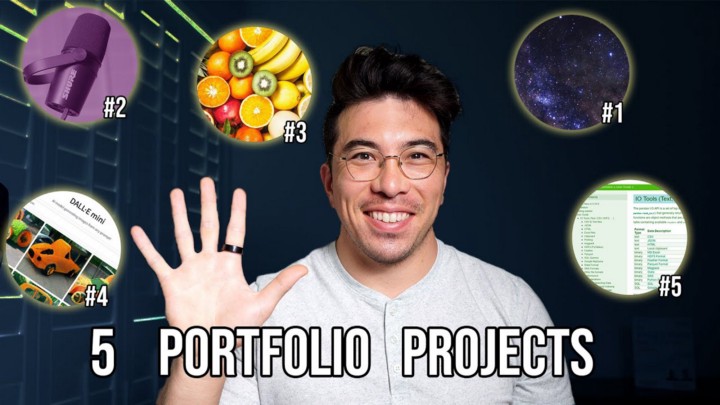
5 Imaginative Data Science Projects That Can Make Your Portfolio Stand Out
OCT 05, 2022


SOURCE: MIXED-NEWS.COM
OCT 04, 2026


SOURCE: NOTEBOOKCHECK.NET
SEP 27, 2026

SOURCE: FORTUNE.COM
SEP 27, 2026


SOURCE: THEGUARDIAN.COM
SEP 11, 2026

