





ThrillSeeker's company filed its 2023 and 2024 reports, and revenue fell 78%
SOURCE: MIXED-NEWS.COM
OCT 04, 2026
A Climate Future You Can Step Into
SOURCE: PSYCHOLOGYTODAY.COM
SEP 02, 2026

Posted September 2, 2026 | Reviewed by Davia Sills


You begin as a child. Through the windows of a virtual home, animals graze in a green field. A parent sits nearby while the television reports on climate change. Then time advances. You are older, and so is your parent. The room has deteriorated. Beyond the glass, fires burn in the distance.
Time jumps again. Now you are the parent. A child turns to you and pleads for their future. The television is dead. Outside, the landscape has been emptied.
Then comes one final journey, 50 years ahead. This future is different. In a virtual museum, you learn that mass public pressure forced political leaders to act. The worst outcome was not inevitable after all.
This is an experiment designed to investigate a difficult question: Can people’s environmental attitudes change when the future is no longer something they merely hear about, but somewhere they feel they have lived?
Climate change presents psychologists with an unusual problem. Its causes stretch across countries, industries, and generations. Many of its most severe consequences lie beyond the horizon of everyday life. A graph can show rising temperatures, but it cannot easily convey what it might feel like to age inside a changing climate, or to explain that change to a child who must live with it.
Virtual reality offers researchers a way to manipulate this psychological distance. It can place people inside environments that do not yet exist, while carefully controlling what they see and how they encounter it.
In the study, conducted by Yuke Pi and colleagues, 41 participants experienced the same four-part journey through past, present, and possible futures. Twenty-one entered it through a life-sized avatar whose movements followed their own. They could look down and see a body, watch it move in a mirror, and interact with objects in the room. The remaining 20 watched the same events as invisible observers, without a virtual body. The researchers called the first experience embodiment: in everyday language, this means that the virtual body can begin to feel temporarily like your body. You know intellectually that the hands and reflection are computer-generated, yet your perceptual system treats them as belonging to you.
That distinction allowed the researchers to ask something more precise than whether VR is persuasive. Both groups saw the same damaged home, burning landscape, and hopeful conclusion. What differed was whether participants watched a family endure climate change or occupied a place within that family.
It is relatively easy to ask whether someone is worried about climate change. But worry alone may not lead anywhere, as a person can be deeply concerned while also believing that individual action is futile.
The researchers therefore measured several different responses: participants rated whether they believed their own actions could influence climate change and whether acting might encourage other people to join them. They also reported intentions to sign petitions, contact public officials, attend demonstrations, and take part in other forms of collective action.
The researchers also used a carbon footprint calculator covering food, travel, household energy, and consumption. Participants completed it before the VR session, two weeks later, and again after six weeks. This moved the study beyond a single questionnaire administered while the experience was still fresh.
The results were promising, but not simple.
Participants in both groups reported lower estimated carbon footprints after the experience, including at the six-week follow-up. The early reduction appeared larger among those who had occupied a virtual body. Immediately after the session, participants also expressed a stronger sense that their actions mattered and could encourage others. Political participation intentions rose sharply, while reports collected six weeks later suggested that some increase in climate-related activity remained.
Embodiment seemed to intensify some short-term reactions, but it was not consistently superior. The story itself, including its movement through time, its family relationships, its catastrophic scenes, and its hopeful ending, may have done much of the work.
The experiment did not end amid flames and abandonment. That decision is scientifically important.
A frightening future can create urgency, but it can also produce helplessness. If disaster appears complete and unavoidable, there is little reason to act. The final scene offered what psychologists sometimes call constructive hope: hope based not on denying the danger, but on showing a believable route through it.
In this case, that route was collective pressure. The future improved because citizens protested, spread information, and pushed institutions to respond. The scenario therefore connected individual influence with coordinated political action instead of implying that climate change could be solved through private consumer choices alone.
Yet the study cannot tell us which ingredient was decisive. Participants encountered disaster, aging, parenthood, real news footage, interactive objects, and an optimistic resolution in a single sequence. Future experiments could separate these elements: catastrophe with and without hope, embodiment with and without aging, or private lifestyle messages compared with collective-action messages.
The findings reveal what VR can contribute to environmental research.
Its real value is not simply that it makes climate change look dramatic. Film can do that. VR allows researchers to alter the participant’s position inside the drama. They can hold a future constant while changing whether someone watches it, inhabits it, causes it, survives it, or remembers it.
That makes virtual reality less like a crystal ball and more like a wind tunnel for environmental psychology. It cannot predict exactly how society will respond to climate change. But it can create controlled possible worlds and test which experiences make people return to the real one prepared to behave differently.
References
Pi Y, Pan X, Slater M and ?widrakPi, Y., Pan, X., Slater, M., & ?widrak, J. (2025). Embodied time travel in VR: from witnessing climate change to action for prevention. Frontiers in Virtual Reality, 5, 1499835. https://doi.org/10.3389/frvir.2024.1499835
LATEST NEWS

Computer Vision
Dual-Stream AI Combines Compression Clues and Deep Vision to Expose Doctored Images
OCT 10, 2026


WHAT'S TRENDING
Data Science
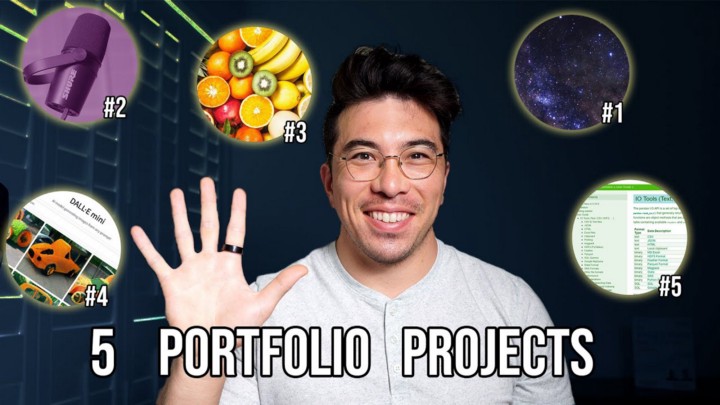
5 Imaginative Data Science Projects That Can Make Your Portfolio Stand Out
OCT 05, 2022


SOURCE: MIXED-NEWS.COM
OCT 04, 2026

SOURCE: EN.GAMEGPU.COM
OCT 04, 2026

SOURCE: ALVINOLOGY.COM
SEP 27, 2026

SOURCE: MIXED-NEWS.COM
SEP 27, 2026


SOURCE: THEMACHINEMAKER.COM
SEP 19, 2026

SOURCE: CITYLIMITS.ORG
SEP 09, 2026

SOURCE: MPRNEWS.ORG
SEP 09, 2026